Why Handles Reveal How We Expect an Object to Be Used
Why handles reveal how we expect an object to be used: read grip, direction and movement from a handle’s shape to choose and use objects with confidence.
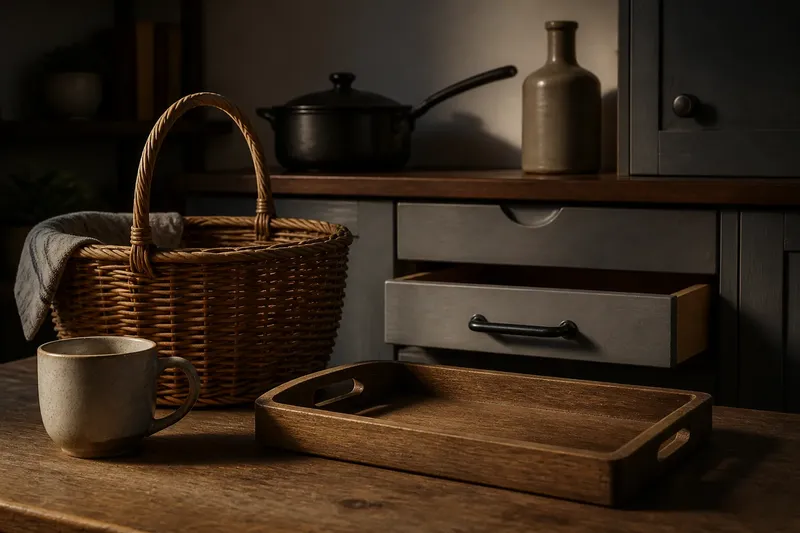
A saucepan handle points away from the hot body; a drawer pull meets the hand at the point where the drawer should move. These details make the intended action readable before anyone explains it. Why handles reveal how we expect an object to be used is a question about form as much as function: shape and placement suggest where to grip, which way to move, and what sort of contact the object invites.
Handles are not all invitations to lift. Some ask for pulling, turning, carrying, steadying or operating with a particular part of the hand. A useful way to read them is to compare three approaches: the closed loop, the projecting bar or knob, and the integrated grip formed from the object itself. Each signals a different relationship between hand and object, and each suits different movements.
A closed loop makes carrying and lifting legible
A loop gives the fingers an enclosed space to enter. On a bucket, basket or mug, that opening signals that the object can be lifted while its body hangs beneath the hand. The loop also allows the user to change their grip within its boundary, which can help when the object shifts or its weight is uneven.
The loop’s orientation adds another clue. A handle that rises above a vessel invites lifting from above; a side loop on a cup is arranged for a hand approaching from the side. The size and shape affect whether the hand closes around the handle or passes through it, so the same basic form can support quite different gestures.
Loops are especially suited to objects that travel with their contents or need to be lifted clear of a surface. A woven shopping basket, for instance, carries groceries while leaving the other hand free. A loop on a small drinking cup instead helps keep the fingers away from the vessel’s body, though the cup’s material and intended use still matter.
Look at the direction in which the loop swings or sits. A freely moving bail handle on a pail can settle over the load when carried, while a fixed loop on a vessel stays in a predictable position for each lift.
A projecting pull signals movement along an axis
A bar or knob that stands out from a flat surface usually asks the hand to pull, push or turn. A drawer handle makes the expected direction especially clear: the grip projects from the drawer front, and the drawer travels out towards the user. A door lever similarly gives the hand a point of contact while the latch releases and the door swings.
Bars spread contact across several fingers, which can feel natural when a straight pull is needed. Knobs concentrate contact in the fingers or palm and often suggest a turn, though a knob can also be pulled. The surrounding object helps resolve the ambiguity: a round knob on a cupboard door commonly turns or pulls the door open, while a knob on a tap is meant to rotate or press according to its design.
This form suits objects whose movement has a clear direction or whose mechanism needs a deliberate input. It is also useful when a hand should grasp from outside the object rather than enter an opening. A projecting handle can, however, catch on clothing or restrict access in a narrow passage; a flush pull may be more suitable where the object sits close to other things.
When reading a pull, notice its position relative to the moving part. A handle near the edge of a drawer gives leverage for opening it; a centred pull may distribute the action more evenly. The placement tells you not only where to touch but where the maker expects the force to go.
An integrated grip blends contact into the object
Some objects have no separate handle. A shallow recess in a cabinet front, the shaped edge of a serving tray or the neck of a bottle provides a place for fingers without adding a distinct attachment. This integrated grip keeps the silhouette simple and can reduce protrusions, while still making a particular hold possible.
Its invitation is often quieter than that of a loop or bar. A recessed finger channel says to hook the fingertips and draw the panel forward; a narrowed neck suggests a hand wrapping around the object. A tray with cut-outs at opposing sides indicates that it is meant to be carried with both hands and held level.
Integrated grips suit objects that benefit from a smooth exterior, or whose form already narrows at a natural holding point. They can also help an object fit into a compact space. The trade-off is that a recess may be difficult to use with bulky gloves or limited finger movement, while a smooth surface may offer less certainty when the object is wet.
Imagine a hypothetical kitchen with a shallow drawer fitted with a recessed pull. If the resident keeps catching sleeves on projecting hardware, they might choose a deeper finger channel and place it where the hand naturally reaches. The expected result is a drawer front that remains flush while offering a clearer grip, without changing the drawer’s direction of travel.
Choose a handle by matching grip to movement
Start by naming the action, not by judging the handle’s appearance. Is the object meant to be lifted, carried, pulled, turned, pushed or held steady while another task happens? Then consider who will use it, where it sits, and whether the hand approaches from above, from the side or straight on.
- Choose a loop when the object needs to hang from the hand during a lift or carry.
- Choose a bar when the user needs a broad grip for a direct pull or push.
- Choose a knob when a compact point of contact suits a turn or short pull.
- Choose an integrated grip when a flush surface matters and the object can provide a usable recess or shaped edge.
- Check the approach by considering how a hand reaches the object in its usual position.
- Consider the user’s grip so the handle is comfortable for the hands that will use it, rather than only visually neat.
Say you are choosing between a loop and a bar for a lightweight storage basket. If it will be carried across a room with the contents shifting, a loop may let the basket hang and settle; if it will be pulled from a low shelf without lifting, a projecting bar may make the intended motion clearer. The choice follows the action the object performs most often.
Material and construction also affect how a handle communicates. A cool metal bar may feel different from a smooth wooden loop, while a soft fabric grip can signal that the object is intended to be held for longer. These cues should support the object’s use, not contradict it: a delicate-looking grip on a heavy container may make the intended load seem uncertain.
What can a handle tell you?
Does a handle always show the correct way to use an object?
A handle gives a strong clue, but it is not a complete instruction. A knob may invite either turning or pulling, and the object’s hinges, controls and surrounding shape help clarify the intended action.
Why are some handles placed on one side?
Side placement often matches the direction of approach or movement. A cup handle lets fingers hold the vessel from the side, while a handle on a door or drawer is positioned where the user can apply force to the moving part.
When is a recessed grip preferable to a projecting handle?
A recessed grip can suit a surface that needs to stay flush, such as a cabinet front in a tight walkway. It is less useful if the recess is too shallow for the user’s fingers or awkward to reach.
Can an object have more than one intended grip?
Yes. A tray may have opposing grips for two-handed carrying, while a pot can offer a main handle and a smaller helper grip. Multiple contact points indicate that the object may need support or balance during particular movements.
Read the hand’s path before choosing
To understand an unfamiliar handle, trace the likely path of the hand from approach to action: where the fingers land, how the wrist turns, and which way the object moves. That simple reading often distinguishes a grip meant for lifting from one designed for leverage or control.
Why handles reveal how we expect an object to be used is most apparent when the grip and movement agree. A loop should make carrying feel plausible, a pull should point towards the object’s travel, and an integrated grip should offer enough room for the intended hand. Choose the form that makes the everyday action easiest to recognise and perform.
When the object’s purpose remains unclear, let its moving parts settle the question: hinges, tracks, lids and pivots often confirm the direction that the handle first suggests.