The Keepsake Box Is Not a Memory Machine
A keepsake box cannot preserve every memory. Use a short, month-long routine to choose objects that bring a clear story back without storing everything.
A keepsake box can hold a ticket stub, a chipped mug or a child’s drawing, but keeping more objects does not preserve more memory. A deliberate routine helps you choose keepsakes for the stories they bring back, rather than for the amount of life they seem to contain.
The distinction matters when a drawer begins to fill with objects that feel too significant to discard. A possession can prompt a memory, but it cannot carry the whole experience on its own; the people, place and circumstances that made it matter may be missing unless you record them.
Choose keepsakes for the story they call back
Start with the moment, not the object. Ask what you want to be able to recall: a conversation at a kitchen table, the route to a first job, the sound of a family gathering, or the way someone used a familiar tool.
Then ask whether this particular object helps you return to that moment. A folded programme might bring back the friends who went with you, while a generic souvenir from the same outing may recall little beyond the fact that you travelled.
A useful keepsake does not need to be rare or attractive. It needs a connection you can explain in your own words, and it should be possible to store it without putting it at risk or making the collection unmanageable.
Set aside a month to make considered choices
Use a month-long routine rather than sorting everything during one emotional afternoon. The pause gives you room to distinguish an object’s history from the pressure you feel to keep it.
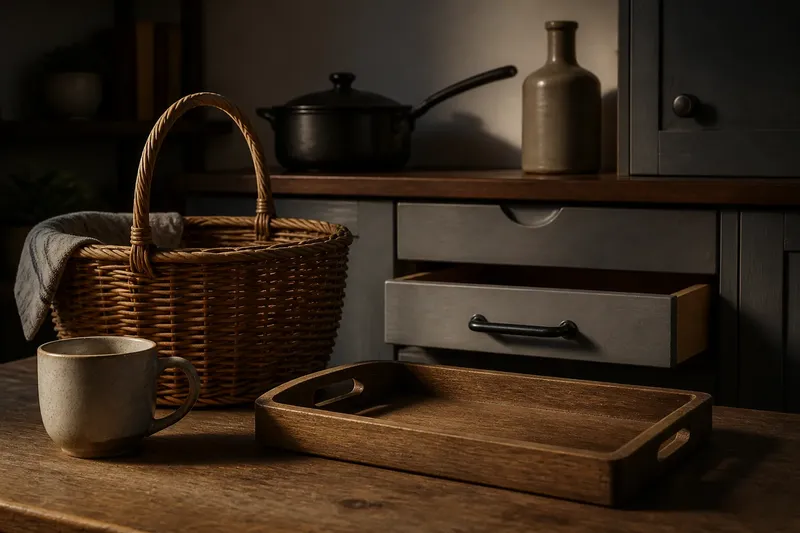
- First week: Choose one small area, such as a memory box, a desk drawer or a shelf. Put possible keepsakes in a temporary tray, but leave ordinary household items where they are.
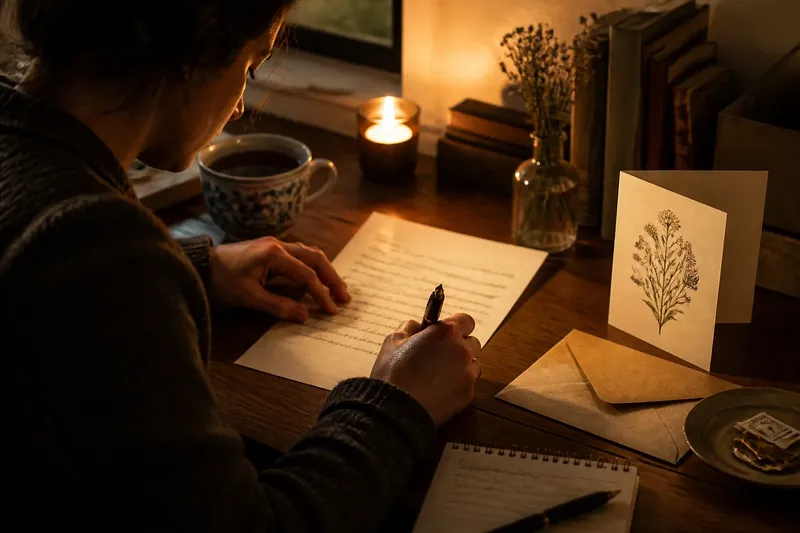
- Second week: For each candidate, write a brief note about the event, the people involved and the detail you want to remember. If you cannot name a story yet, keep the object in the tray for now rather than forcing a decision.
- Third week: Return to the objects and read the notes. Keep the items that still bring back a specific moment; let go of duplicates or objects whose stories are better captured by a note or photograph.
- Fourth week: Place the chosen items in a suitable container, attach or store their notes, and decide when you will review the box again. Pass along, recycle or otherwise dispose of the remaining items in a way that suits their material and condition.
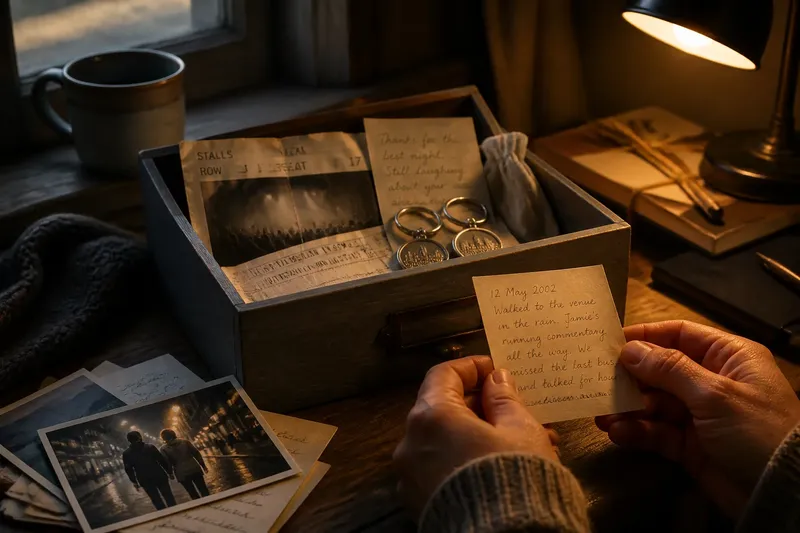
Say you have a creased paper ticket from a concert, two matching souvenir key rings and a note from the friend who went with you. The ticket brings back the walk to the venue and the friend’s running commentary; the key rings have no separate story. You might keep the ticket with a note about the evening and give away or discard the duplicates.
Record the details an object cannot keep
A few lines can hold context that is invisible to anyone opening the box later. Note who gave or used the object, where it belonged, what was happening at the time and which small detail you hope to remember.
Keep the wording plain. “Dad’s blue pencil, used to mark the shopping list beside the telephone” gives a future reader more to work with than “old pencil” or “family memory.” If the story is shared, include the names or relationships that make it understandable.
Use acid-free paper for notes stored beside delicate photographs or documents, and avoid writing directly on fragile or valuable items. For irreplaceable material, follow suitable conservation advice; a qualified conservator can help if its condition is uncertain.
Decide what deserves space and what needs another form
Physical objects are only one way to remember. A photograph, a handwritten note, a short audio recording or a retold story may preserve the part that matters without keeping every object connected to it.
Choose the form that suits the memory. A bulky child’s painting might be photographed with a note about its maker and the occasion; a worn tool may be worth keeping because its handle and marks show how someone used it. If the object itself carries the meaning, a photograph may not be an adequate substitute.
Consider condition and practicality before storing anything. Paper can fade, photographs can stick together, and fabric can attract dust or pests; clean, dry storage and containers suited to the material help prevent avoidable damage. Check labels, manufacturer instructions and local rules where they apply, particularly before disposing of unusual materials.
Make room for changing memories
A keepsake’s meaning can shift. An object that once seemed central may later feel less connected to your life, while a modest item may become more important as you learn the story behind it.
When you review the box, read the notes before deciding what to keep. If an item still prompts a clear memory, give it a sensible place; if the note now carries the story better, you can consider letting the object go. There is no need to repeat the whole sorting routine on a rigid schedule.
For a shared family collection, ask who knows the story and whether anyone else wants the object before making a final decision. A short conversation can add names and context to a note, but it does not require every relative to value the same thing.
Questions that help settle a keepsake decision?
How many objects should a keepsake box hold?
Choose a container that fits the space you can reasonably give it, then let that limit prompt thoughtful selection rather than automatic expansion. Keep the objects with the clearest stories, and record other memories in a form that suits them.
Should I keep an object if I cannot remember its story?
Set it aside briefly and ask relatives or friends who might recognise it. If the story remains unclear, you can keep a note about what you know, choose a photograph instead, or let the object go without pretending its meaning is certain.
Is a photograph enough to replace a physical keepsake?
Sometimes, especially when the object matters chiefly as a reminder of an event. A photograph cannot preserve texture, handwriting or use-wear, so keep the original when those qualities are part of the story and storage is practical.
Let the note carry the memory forward
The most useful keepsake is not necessarily the object you have held longest. It is the one that, together with a few clear words, helps someone recognise the people, place or moment that made it worth keeping.
When you add something to the box, add its story at the same time. That small habit makes the keepsake box a collection of remembered connections, not a claim that every saved object can preserve the past.