A Place Setting for a Shared Meal, Without a Rulebook
A place setting for a shared meal should fit the dishes and conversation. Arrange serving space, seats and tableware so guests can reach what they need.
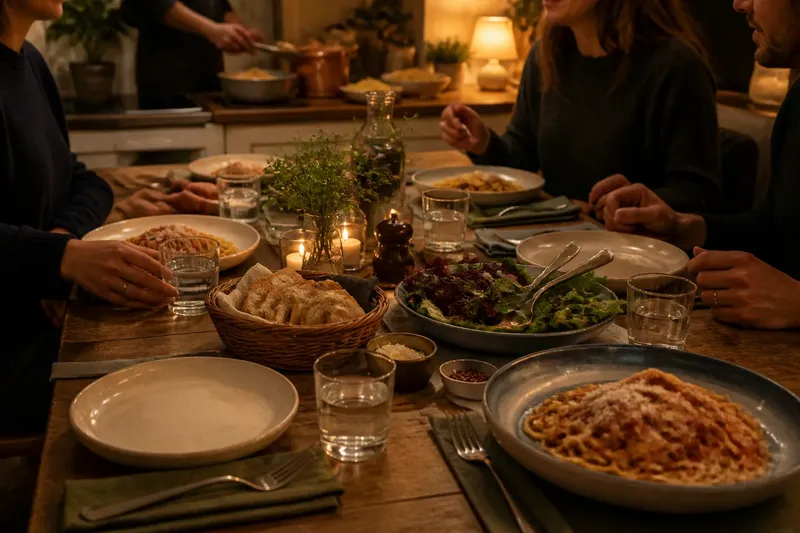
A place setting for a shared meal works best when it leaves room for the food to travel and the conversation to continue. Begin with the dishes you plan to serve, then decide where people will sit, pass bowls and set down their plates; the arrangement should follow the gathering, not an inherited diagram.
That can mean a table with mismatched plates, a stack of napkins at one end or extra chairs gathered from another room. The useful question is not whether every place looks alike, but whether each guest can eat comfortably without blocking the shared dishes or interrupting someone else.
Start with the shape of the meal
Before laying out cutlery, picture the meal at its busiest moment. Think about the largest serving dish, the drinks, any condiments and the plates people will hold while passing food. A table that looks spacious before dinner can become crowded as soon as those pieces arrive.
Choose a serving style that suits the room and the food:
- Passing dishes at the table: Keep the centre open enough for bowls to move from hand to hand. Put serving spoons with the dishes and make sure guests can pass them without lifting a glass or reaching across a plate.
- Serving from a sideboard or kitchen counter: Leave table space for plates, glasses and conversation. Tell guests where the food is, and avoid making the route to it cross a doorway or a crowded seating area.
- Plating food before everyone sits: Set out the plates and cutlery first, then keep the centre clear for water, bread or a simple centrepiece. This suits a meal where serving dishes would take up too much room.
- Mixing serving styles: Put the dishes that are easiest to pass on the table and the bulky or spill-prone items on a nearby surface. This can preserve room while keeping the meal informal.
If several dishes need the same serving space, use a side surface rather than forcing everything into the middle. A clear route between kitchen and table also makes it easier to bring out hot food without asking seated guests to move.
Choose a setting for the way guests will eat
A place setting is the small area each guest needs for a plate, cutlery, drink and napkin. Set those items down in a way that feels obvious, but treat the arrangement as a convenience rather than a test of etiquette. The plate belongs where the guest can reach it; the napkin can sit beside it or on it.
For food eaten with a knife and fork, place the fork on the left and the knife on the right, with the blade turned towards the plate. Add a spoon only if the menu calls for one. If guests will serve themselves, put the plate where it is easy to collect before they approach the food; if plates will be passed around, keep one at each seat.
For a meal built around bread, dips, tacos or other foods handled by hand, cutlery may be unnecessary. Give each person a plate and napkin, and place small bowls of sauce or accompaniments where they can be reached without crossing the main serving route. A small plate for bones, shells or discarded wrappers can save guests from balancing scraps beside their food.
Glasses should sit within easy reach without taking up the space needed for elbows. If the table is narrow, put a water jug on a side surface and invite people to refill their own glasses. Choose tableware that matches the food and the washing-up you can manage, not an imagined standard for a proper dinner.
Fit the arrangement to the room and the group
When the table is small, prioritise plates, drinks and access to food. Move flowers, candles and decorative objects elsewhere, or use a low, narrow centrepiece that does not interrupt sightlines. If the only available surface is a coffee table, cushions and sturdy plates can make a relaxed meal workable; provide a nearby place for drinks so they are not balanced at the edge.
For a larger group, consider more than one serving point. Two bread baskets or water jugs placed apart can reduce repeated reaching, while a second small table can hold dishes waiting to be served. Keep enough space around chairs for people to sit down and stand up without nudging neighbouring settings.
For children or guests who need extra room, make the seating choice before arranging the rest of the table. A spot near the end may be easier to enter and leave; a stable, non-breakable cup may suit a child better than a delicate glass. Ask about access needs where appropriate, and leave a clear route through the room rather than relying on someone to squeeze past a chair.
Imagine you are hosting a shared pasta supper at a narrow kitchen table, with a large salad bowl and a basket of bread. You could put the pasta pot and salad on a counter, leave the bread in the table’s centre and set each place with a plate, fork, water glass and napkin; guests would have room to talk and could collect the main dish without lifting bowls over one another.
Make the table feel shared without making it formal
Small repeated details can help a mixed table feel intentional. Use the same napkin colour with different plates, group water glasses together or place serving spoons beside the dishes that need them. These choices create a visual thread without requiring a matching set.
Let the meal itself supply some of the table’s character. A bowl of lemons beside fish, a basket of flatbread beside dips or a jug of water with herbs can be both useful and welcoming. Keep decorations low enough that guests can see one another, and avoid scented flowers or candles if their smell might compete with the food.
Leave a little unassigned space. Guests may bring a dish, need somewhere to put a phone or want to move a plate while serving. A table packed edge to edge can make an otherwise generous meal feel difficult to join.
What fits your gathering best?
What should go on the table for a casual shared meal?
Put out the plate, drink and napkin each person needs, then add cutlery only for the food that calls for it. Keep serving dishes and their utensils together so guests can see what belongs where.
Where should serving bowls go?
Place frequently passed dishes where more than one guest can reach them, and put bulky dishes on a sideboard or counter. If a bowl is hot, heavy or awkward to pass, keep it on a stable surface and let people serve from there.
How can a small table fit a shared meal?
Use the table for individual settings and a few easy-to-pass items, then move extra dishes, drinks or condiments to a nearby surface. Clear away decorative pieces that compete with plates and elbows.
Do all place settings need to match?
No. Similar-sized plates and a shared detail, such as napkins in one colour, can make different pieces sit comfortably together. Prioritise stable, usable tableware over visual uniformity.
Make the final arrangement easy to read
Before guests arrive, sit in each chair and look at the table from that position. Check whether a serving dish blocks someone’s view, whether a glass sits in the path of a passing bowl and whether a guest can get in and out without shifting another person’s chair. This quick visual check catches practical snags that are hard to notice while standing.
Then set out the food in the order people will need it. Plates should be available before guests reach the serving dishes; serving spoons should be in place before anyone needs to improvise with a fork. If the arrangement changes once the food arrives, move objects rather than asking guests to work around an avoidable obstacle.
For a place setting for a shared meal, the best decision is the one that matches the actual gathering: its dishes, its room and the way its guests will eat. Keep the essentials close, make shared food easy to reach and leave enough open space for people to settle into the meal together.